Posted in Writing

Ready…Set…NaNoWriMo

waitLess than 24 hours until the start of NaNoWriMo.

Over the last month, we at Today’s Author have weighed in on NaNoWriMo. We’ve told you why we’ll play along, and why we won’t. We’ve meted out advice on what you need to do in order to finish, and what you need to have in place before you start to improve your chances.

Now it’s your turn…and, ours too. Depending on when you’re reading this, you have less than 24 hours left in your normal life.

Over the next month, we understand you might be a little short on time, but be sure to swing by. We’ll be here. Some of us will be sharing our own NaNoWriMo progress. We’ll also be continuing our tradition of supplying writing prompts each Tuesday and Friday–if you’re up against a creative block, these could provide just the right boost. And others will be offering encouraging words and a shoulder to lean on.

Good luck.

Well? What are you waiting for? Get writing.

But wait until Midnight or it doesn’t count.

Posted in Writing

Planning for a Busy November

This month, we at Today’s Author have a specific goal in mind. We want you help you get ready for NaNoWriMo.

What?! You’ve never heard of NaNoWriMo?!
Come out from under that rock and sit a spell, and let me fill you in. This is from their Wikipedia page:”NaNoWriMo is an annual internet-based creative writing project that takes place every November. NaNoWriMo challenges participants to write 50,000 words of a new novel between November 1 and 30. Despite its name, it accepts entries from around the world. The goal of NaNoWriMo is to get people writing, no matter how bad the writing is, through the end of a first draft.”

I’ll take exception to one part of that description: “no matter how bad the writing is.”

I don’t like that. While I certainly agree that the goal of turning off your editor, and giving the creative monster inside you a Frankenstein-like jolt of juice, if at the end of the month, you’re left with 50,000 words that make you cringe when you think about tucking into the second draft, I don’t think you’ve done yourself any favors. Of course, I’d rather you write 50,000 words about the positive effects the US Congress has had on the modern word (i.e., alternative history/speculative fiction) then nothing at all.
NaNoWriMo2013This month, we want to help you move past the nothing, keep moving past the worthless first draft, and into the territory of creating a first draft that leaves you wanting to finish it. A lofty goal for sure, but most of us here at Today’s Author lean a little toward the megalomaniacal.

To kick things off, I want to help you with a little basic math.

To finish NaNoWriMo you need to write 50,000 words in November. November has 30 days. That’s 1666.66667 words each day, right? You don’t need to look for a calculator, Google search will solve math problems for you. I’ll wait. OK, so whether you just checked my math or not….That’s 1666.66667 words each day, right?

WRONG. It’s at least 2,000 words per day.

No, I didn’t suddenly develop acalculia. I am instead acknowledging a basic fact: *(&%^# happens. You will not be able to write everyday–or at the very least you can’t rely on the same level of productivity each day. Why not?

Oh I don’t know…maybe Thanksgiving! Yes the the helpful people at NaNoWriMo chose a month that’s 3-7 days shorter than it appears–at least for those of us in the US. Unless you have no family, or are more than willing to snub them, you’re probably not going to get a lot of writing done on National Food Coma Day (NaFooCoDa)–what with all that football and all those carbs. And if you’ve got kids and a budget, you may lose a good bit of the next day as well, as you pepper spray and kidney punch your neighbors to beat them out to the extra 1% discount that applies from 5:00AM to 5:01AM–Ahhhh, Black Friday.

The point is, if you want to succeed, you need to build a little margin-of-error into your schedule. Because in November the silent manjority of NaNoWriMos (>85% don’t finish) will learn the hard way that it’s nearly impossible to write 50,000 words in 30 days if you’re writing behind schedule.

If in the first six days you can write 2,000 words each day, you’ll be at 12,000–2,000 words ahead of where you need to be at the 1666.66667 pace. That’s a whole day off. That’s a day to be sick, to spend with your kids, to lock yourself in the bathroom and cry–you know, however you like to spend your time. And if you’re one of those who can write 2,000 words every day, then on November 25th you’ll be done.

And then you can stuff yourself to the brim with cranberries and stuffing, basking in the knowledge that you are awesome, and you didn’t need the whole November to write your draft. Heck you wouldn’t even have needed all of February.

Posted in Writing

Poet, Author, Academic, Diplomat

For obvious reasons, we try to talk very little about politics on Today’s Author, but there are times when politics is an unwanted guest in the world of creative writing.

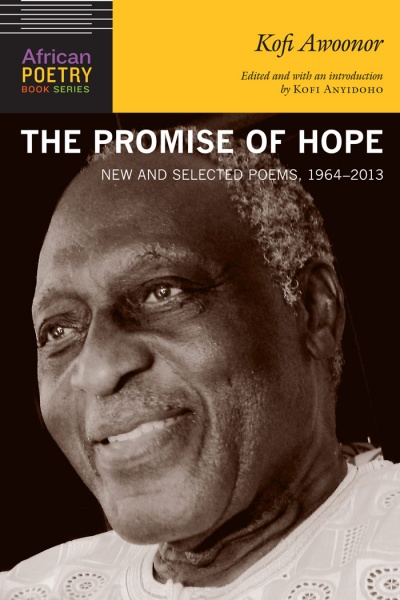
Kofi AwoonorUnless you are a current events avoider, I’m sure you’ve heard about the terrorist attack at the Westgate mall in Nairobi, Kenya. What you may not know–I didn’t–was that one of those killed was a writer. His name was Kofi Awoonor.

Kofi Awoonor was, perhaps, the leading poet of Ghana. And if it wasn’t him, it was his cousin, Kofi Anyidoho. He was most famous for his poetry which was inspired by the oral tradition of the Ewe people. He studied at, then taught at the University of Ghana, before moving on to the University of London to study literature. He wrote several plays for the BBC, before moving to the US as a kind of travelling student/professor. After he returned to Africa in 1975 he became politically active, and was imprisoned without trial–after this his focus shifted and he wrote mostly non-fiction. From 1990 to 1994 he was Ghana’s Permanent Representative to the United Nations, and headed the UN’s committee against Apartheid.

He was killed hours before he was scheduled to perform at the Storymoja Hay Festival–a four-day celebration of writing, thinking and storytelling.

Perhaps, his most famous work, is the protest poem, The Cathedral.

THE CATHEDRAL
On this dirty patch
a tree once stood
shedding incense on the infant corn:
its boughs stretched across a heaven
brightened by the last fires of a tribe.
They sent surveyors and builders
who cut that tree
planting in its place
A huge senseless cathedral of doom.

Kofi Awoonor
1935 – 2013
Poet, Author, Academic, Diplomat

Posted in Writing

Dealing with Cruft

crufty

Cruft krʌft
noun

  1. (computing, informal) Anything old or of inferior quality.
  2. (computing, informal) Redundant, old or improperly written code, especially that which accumulates over time.

Cruft is a computing term–

WAIT! DON’T GO! I promise this will be about writing, even if I occasionally delve into computers for an analogy.

In computer coding, cruft is the buildup of useless or redundant programming language, usually caused by incomplete editing, often resulting from tight deadlines. Let’s say you’re writing a program to automatically email a response to someone who leaves a comment on your website. You have two ideas as to how to go about this. You try one, but you’re not happy with the way it works. So you disable the first try–you don’t delete it, just in case your second try is worse–and try plan B. Plan B works great, so you save it, and you’re on your merry way. But that first attempt is just sitting there in the code, not doing anything, but taking up space.

The remnants of that first attempt is cruft. The program will work, and the end results may be just as effective as if you go back and get rid of all that redundant code. And that code just sits there, deactivated, taking up a small amount of space on someone’s hard drive, causing your website, or your computer, to run just the tiniest bit slower. A little bit of cruft is no big deal. But if too many of your programs have tiny bits of cruft, the cumulative effect can be noteworthy.

In creative writing the same process occurs. Let’s say you decide you need to delve into your protagonist’s reason for doing what she does. So you write a scene with her psychologist. The scene is well-crafted, and you love how the the snappy dialogue turned out–it’s actually one of your favorite scenes in the story. But now that you’ve moved on, you realize that her motivations are well laid out in the action of your story. But you don’t want to cut the scene because you’re proud of it–especially the great dialogue.

That scene is now cruft. It’s something that isn’t advancing your story–just taking up space. Now of course, this is a simplistic example. Maybe that scene still has a purpose. Maybe the fact that she can open up to her therapist but not her girlfriend is helpful to the story.

When editing, determining what is cruft and what still has purpose is one of the most difficult skills to develop. It’s only the most useless of description or scenes that has no purpose whatsoever. The harder line to walk is to know whether the bit of story is important enough to the plot, or the character development, or the texture of the writing to keep it.

It’s the difference between bloated writing, and tight, crisp prose.

Posted in Writing

Advice From Cats

or

Why You Cross the Street When You See a Writer Coming

Dale-Roe-AvatarI’ve always been fascinated by the creative process. And not the just the way we come up with ideas, but the nearly endless ways each of us has to shepherd those ideas to fruition.

It’s a time-tested method to shut off your internal editor during the process of creation. Many of us will dress this up with our own justifications, but what it all boils down to is that the inception of ideas is a process of creative thinking–and the tailoring and editing of ideas is a process of critical thinking–and those two kinds of thinking can’t happen at once. Coexistence doesn’t work because the creative can’t deal with this editor.

Of course, there is a time for that editor. The work that your internal editor does is at least as important as your raw creativity. This editor tweaks characters, tailors plots, smooths over rough scenes, or dialogue, or exposition. Without the editor, your writing would never progress beyond raw, unshaped, occasionally-clever prose.

But in order to be a decent author you need to let each of those processes have their time. Over the years I’ve developed a method to wall off my editor from my creator. What’s my secret?

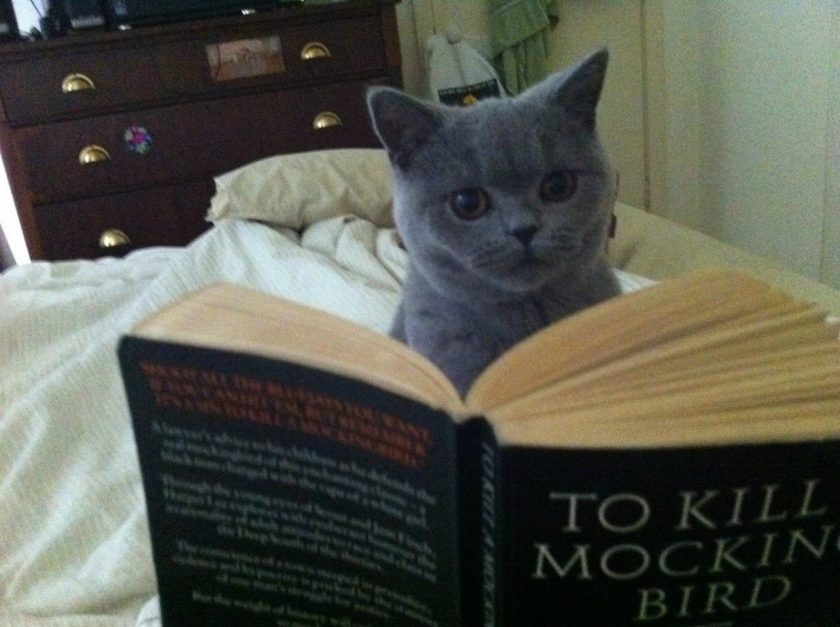
My editor is my cat.

Go ahead and laugh. I’ll wait.

I don’t mean that literally, or course. I haven’t slipped that far into the realm of crazy cat guy. What I do is when I’m trying to reason something out, I explain it to my cat.

She’s helpful in two key ways. First, she’s a pretty good listener, and she’ll sit there for minutes on end as I elaborate on a tricky point. Second, she’s quite good at delivering a judgmental stare–so if I’m a bit unsure of an aspect of what I’m working on, I tend to over-explain, talking it to death. This desire to explain the rocky section, is generally a reliable sign that something’s just not working.

Now, a cat may not work as your editor. For one, you might not have a cat. Or maybe your cat doesn’t have the haughty glare of a librarian. Maybe your dog will work. My old Shih-Tzu would have been great, with those calm, wise eyes. But every other dog I’ve had would have been too willing to please.

Or maybe you are your own best editor. Maybe you can keep your two halves separate in a way I never could. Or maybe you just wind up arguing with yourself incessantly, mumbling plot devices and trying out different voices for your characters, regardless of who might be in earshot. It’s these writers who are often mistaken for schizophrenics–or Bluetooth addicts.

Just remember to keep your editor happy. A can of tuna often works.

Posted in Writing

I Need Space

deskI’ll be moving soon. Nothing major. No huge life changes. We’re moving from an apartment in Raleigh to an apartment in neighboring Durham—mostly to cut down on expenses and to drastically shorten the morning commute. And as I’m boxing up books, and throwing out stuff I haven’t used since the last move, I’m realizing that this move presents certain challenges and opportunities regarding writing.

I have come to the conclusion that my current writing space isn’t working.

But let me take a moment to correctly state the problem:

Like most of us, I have plenty of obstacles that get in the way of writing. Some of them are real, while some of them are undoubtedly intracranially-exaggerated to make myself feel better about why I’m not as productive as I feel I should be. This writing space problem is a real problem. I just don’t know how much of one. But I’m under no delusions that it will be a panacea, and as soon as I clean off my desk, I’ll start cranking out novels.

Here’s the issue:

The desk that I found many years ago in a thrift store, that quickly became my writing desk, has been taken over by life, and is now perpetually crowded by a laptop, USB hub, speakers, a trackball, bills and the detritus that always seems to collect in the places where we spend most of our time.

Now, when I want to write on the computer, this all works reasonably well. Generally, I can move the bills somewhere else in one bundle, turn off the wireless adapter for a little while—maybe put on some ambient music…maybe not—and things are fine. But increasingly, I find the computer a terrible distraction when writing. Even discounting the social and recreational diversions, sometimes when I’m sitting in front of my laptop it’s pretty hard to convince myself that I shouldn’t be doing something else—like designing that website that I agreed to do or reading over that story that a friend is waiting on.

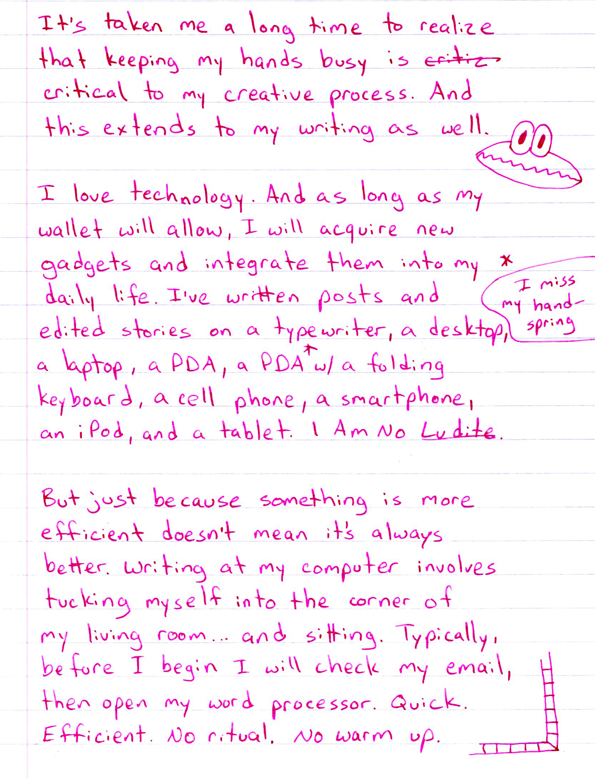
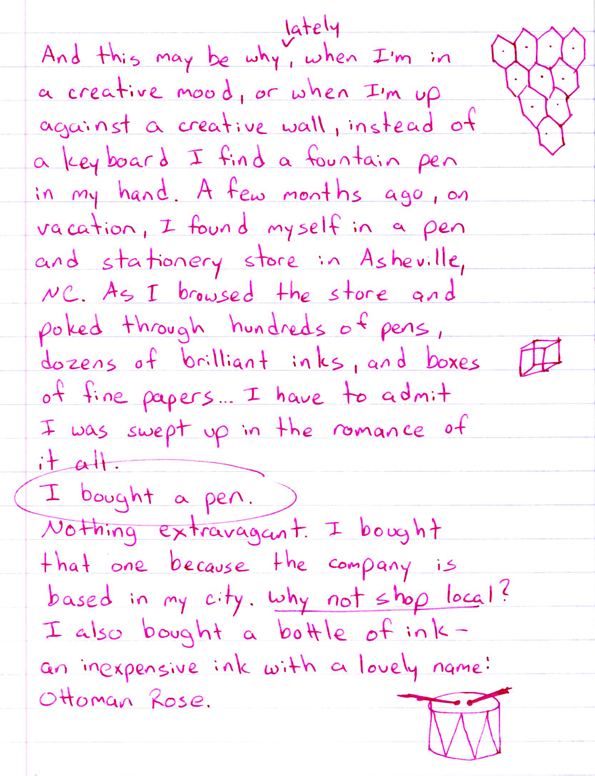
Increasingly, when I’m in the mood to be creative, I’ve been closing the laptop altogether. Admittedly, this has as much to do with limiting distractions as it does with my renewed interest in an old hobby—fountain pens. But regardless of the reasons, the upshot is that if I want to put some ink on the page I need a place to put a notebook. And look at that desk…it’s just not going to happen.

So do I go through the time and expense of getting a new desk (and I’m really not sure where to put it)? Or do I ban my computer, and all its accoutrements, to someplace else, and keep my little desk covered in paper, pens and inks?

This is going to require some thought.

Posted in Writing

Intergalactic War II

So, in case you missed it, yesterday Matt committed the most heinous act of blasphemy ever by anyone, even tangentially, associated with sci-fi. Although he will be forgiven, the Vogons have been notified.
vogons
But I do understand where he’s coming from. He fell victim to one of the classic blunders–Hitchhiker’s Guide to the Galaxy could never have lived up to what it had become in his mind. We’ve all fallen victim to this, and if we’re being honest we’ve all probably done it to other people.

For me, it’s Heinlein’s Stranger in a Strange Land. I hated this book. A visceral, palpable hatred. But I doubt it has much to do with the story or the writing. No, my ex ruined this book. She was both horrified and excited to find out that I’d never read it. Not only did she run right out and buy a copy for me… she hovered. She asked me, at least twice each day, how much I’d read. Did I get to the part where…? Did I like the part where…? Eventually, I finished the book just to get rid of my literary stalker.

In subsequent years I’ve thought about giving the book another try. This book is nearly universally loved by sci-fi types, so it’s probably safe to assume that I’d like it if I gave it a fair shot. But even the thought of reading it again starts my teeth grinding. And even though, in my head I know that my distaste didn’t stem from a weak story, or bad writing, or over-description, or any of my other pet peeves about writing–even though I know that I dislike the book because of the conditions under which I read it–I know I’ll never revisit it because it already has a negative impression.

It would be easy for me to point out to the formerly good guy, Matt, that much of his impression of the book might have been attributed to having inflated preconceptions about Hitchhiker’s. That part of the magic of the book is how it tends to catch readers off-guard with its silly characters and ridiculous plot. It is making fun of serious sci-fi as much as it’s making fun of society. But by the time Evil Overlord Matt read the book, these weren’t a surprise to him. He expected a funny book. In fact, he probably expected a very funny book.

I guess the moral here is to be careful when making recommendations to your friends. You can easily ruin the very thing you’re trying to sell.

That, and Matt should be punished for his heresy.
vogons2

Posted in Writing

How Do You Get There From Here?

Practice makes perfect.

Whatever you choose to call it—aphorism, adage, maxim, idiom, cliché—that saying is largely accepted as truth. But it’s not particularly true. I will certainly concede that practice will make you better at what you are trying to do, but to say it will get you to perfection assumes that you know what to do to achieve perfection.

A quick example might better demonstrate what I mean. Right now, I have achieved a certain level of skill as a writer. Let’s call that level, X. So I write. And I keep writing. Sometimes I don’t do as well as I could, and the story I produce is, oh maybe, X-2. Some days I’m really on my game and I might produce a story that as good as X+2. But most of the time, the stories I write are an X. If I continue to practice, practice, practice, at some point in the future I’ll be a better writer—maybe X+1. But as a writer, my goal is to be a much better writer…let’s call that level Y.

Is practice enough to get me there? I could explain and equivocate, but the answer is, NO. Because at some point you need to acquire the knowledge to know what your weaknesses are AND the knowledge to fix them.

So think back to your childhood. I’ll use the example of learning to throw a football. When I was three or four years old, I started watching football with my dad. When I wanted to learn to play, he bought me a shiny, blue Nerf football. So how did I start? I walked outside and gave a mighty heave. The ball probably flew a foot or so. Now, if I’d relied solely on practice to get better, I’m sure I would have discovered how to hold the ball—eventually. I might even have been able to get some distance on a throw. But I never would have been any good. But that’s not what happened. After that first toss left me frustrated, my father picked up the football and started to show me the basics.

That is to say… he taught me.

While practice is the most fundamental tool we have to get better, it will only get us so far. We have to work to improve our skills by learning. We must learn what we do right, what we do wrong, what we do inconsistently. But more importantly we must learn what other people do, whether it works for them, whether we think it will work for us.

I won’t even try to count the ways to do this. There are classes, workshops, books, magazines, websites, critique groups (where there are writers better than you), forums discussion groups, honest friends…

I need to decide what I will do this year to get closer to Y.

What about you? What are your plans, in the next year, to get better at your craft?

Posted in Writing

Rekindling the Classics

I’ll start this off with a little perspective: I have a Kindle Paperwhite. I like it. I do not love it. I am neither an e-reader hater, or e-reader fanboy. I use my Kindle three or four times each week–about as often as I pick up a paper book. If I had to pick my favorite features of the Kindle, I would choose 1) I no longer have to guess which of seven books I will be in the mood to read at lunch, or in the mechanic’s waiting room; and 2) I no longer have to suffer through the damage that my suitcase or backpack does to my paperbacks.

I’ve had my Kindle for about two years now. And I’ll admit I purchased it with trepidation. I wasn’t sure if I wanted to like it. I like real books. I do not consider it an inconvenience that books take up half of one room of my house. I love that I have shelves full enough to browse for something to read. But still I took a chance.

Two years later, I am only a partial convert. My Kindle has it’s place. While it will never rival the luxurious, tactile sensation of reading a real book, it far surpasses paper books in convenience.

But I have found one area, where real books cannot hold a candle to my e-reader…

Classic Literature.

If some part of your soul just recoiled in horror at the juxtaposition of reading Dickens on an electronic screen, I completely understand. If your viscera trembles in anger at the mere notion, I sympathize. But, please hear me out.

Over the years I’ve accumulated a respectable collection of the classic works. I have at least half of Shakespeare’s plays, a large selection of European-Romantics–Dumas, Hugo, Cervantes–the philosophies, epics, and plays by the Greeks, and quite a few more.

The classics are easy to accumulate. Not only, because some very simple research will give you a good idea of the quality of the book–but also because they’re cheap. If you can bypass the faux-leatherbound editions and those editions heavily-annotated by scholars, they are notably cheaper than modern publications.

But on the e-reader they are even cheaper. Often free.

I don’t even go looking for them. But anytime I hear someone quote a classic…maybe one I’ve read and enjoyed–or maybe one I’ve always meant to read–a quick peek on Amazon usually turns up a free Kindle version. There are also many versions that charge a buck or two–sometimes these are worthless, only adding a different cover, but often these versions have been properly formatted for the Kindle, with chapters and such.

In the last two years I have loaded up my Kindle with many classics that I never got around to reading: Moby Dick, 20000 Leagues Under the Sea, and many others that I’ve loved and now can carry around more easily.

In fact I have far more free content on my Kindle than paid content.

Who would have guessed an e-reader would help me go old school?